
• Home
  • About
  • Legal Team
    • Randall T. Ricciuti
  • Criminal Defense
    • Auto Theft
    • Burglary
    • DUI Defense
      • DUI Checkpoints
      • Statistics
    • Drug Charges
      • Pittsburgh Drug Possession Lawyer
      • Federal Drug Crimes
      • Marijuana Crimes
      • Marijuana Laws
    • Juvenile Crime
    • Money Laundering: Penalties and How It Works
    • Prostitution
      • Solicitation
    • Theft
      • Pittsburgh Larceny Attorneys
    • Robbery
    • Sex Crimes
    • Pittsburgh White Collar Crimes Attorney
      • Federal Fraud
      • Mortgage Fraud
      • Pittsburgh Tax Evasion Attorneys
      • Credit Card Fraud
      • Embezzlement
      • Real Estate Fraud
      • Social Security Fraud
      • Pittsburgh Mail and Wire Fraud Attorneys
      • Fraud of Insurance Products
      • Forgery
      • Identity Theft
      • Rico Racketeering
    • Violent Crimes
      • Assault
      • Aggravated Assault
      • Domestic Violence
      • Gun Charges
      • Harassment and Stalking
      • Homicide
      • Involuntary Manslaughter
      • Vehicular Manslaughter
  • Blog
  • Contact
    • Press
  • Menu
Menu
Call
Contact
Blog
    DeLuca, Ricciuti & Konieczka
    Free Consultation412-281-6869
    • Home
    • About
    • Legal Team
      • Randall T. Ricciuti
    • Criminal Defense
      • Auto Theft
      • Burglary
      • DUI Defense
        • DUI Checkpoints
        • Statistics
      • Drug Charges
        • Pittsburgh Drug Possession Lawyer
        • Federal Drug Crimes
        • Marijuana Crimes
        • Marijuana Laws
      • Juvenile Crime
      • Money Laundering: Penalties and How It Works
      • Prostitution
        • Solicitation
      • Theft
        • Pittsburgh Larceny Attorneys
      • Robbery
      • Sex Crimes
      • Pittsburgh White Collar Crimes Attorney
        • Federal Fraud
        • Mortgage Fraud
        • Pittsburgh Tax Evasion Attorneys
        • Credit Card Fraud
        • Embezzlement
        • Real Estate Fraud
        • Social Security Fraud
        • Pittsburgh Mail and Wire Fraud Attorneys
        • Fraud of Insurance Products
        • Forgery
        • Identity Theft
        • Rico Racketeering
      • Violent Crimes
        • Assault
        • Aggravated Assault
        • Domestic Violence
        • Gun Charges
        • Harassment and Stalking
        • Homicide
        • Involuntary Manslaughter
        • Vehicular Manslaughter
    • Blog
    • Contact
      • Press
    • Menu

    Home • Criminal Defense • Page 4

    Illegal Search and Seizure
    January 25, 2016/in Criminal Defense /by R. Anthony DeLuca

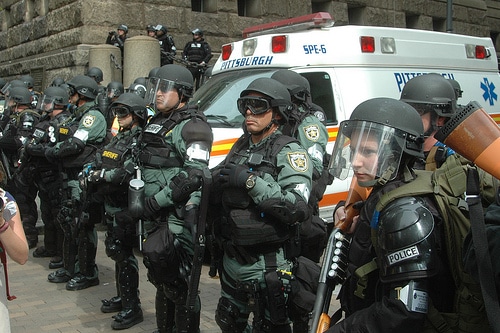
    illegal-search-and-seizure-pittsburgh The U.S. Constitution protects Pennsylvania residents against unreasonable searches and seizures by the government. The Fourth Amendment, part of the Bill of Rights, affirms the right for individuals to be “secure in their persons, houses, papers, and effects” against illegal search and seizure.

    The amendment reinforces the idea that an individual’s home is his castle and should be secure from an unwarranted seizure of property. The law provides protection against capricious arrests and serves as the foundation for a host of other state and federal laws, including those governing search warrants, stop-and-frisk rules and surveillance.

    For example, Pennsylvania law lays out the conditions under which a police officer can arrest an individual without a warrant, based on probable cause of behavior that puts other individuals or property in danger. Such an arrest can relate to disorderly conduct, public drunkenness, obstructing public roads, illegally possessing or consuming liquor, and other potentially criminal acts.

    Under the Fourth Amendment’s exclusionary rule, any evidence that police obtain in a way that violates the amendment cannot be used in criminal proceedings. But what is an “illegal” or “unreasonable” search? The amendment leaves open many aspects of searches and seizures to interpretation by the courts. Over the years, courts have weighed in on what constitutes probable cause, when search warrants are required and a host of related legal issues.

    Digital Search and Seizure

    In recent years, the rise of electronic communications has made interpretation of laws relating to illegal search and seizure even thornier as Internet- and computer-related crimes have increased. Significant evidence of crimes is often found on hard drives, smartphones and other electronic devices, and the courts have ruled that the Fourth Amendment applies to search and seizure of such items.

    Case law has been divided on searches of computers owned by businesses and used by employees. In the majority of cases, courts have found that employees do not have a reasonable expectation of privacy regarding information on company-owned computers, and in 2010 the U.S. Supreme Court ruled that the lack of an expectation of private communications extended to text messages sent on a company-owned mobile device.

    Wiretapping and other forms of electronic surveillance also have led to significant Fourth Amendment litigation in recent years.

    What Is Protected Against Illegal Search and Seizure?

    Courts determine what the Fourth Amendment means by “search” or “seizure” in given situations. Not all conduct and not all situations are protected by the amendment.

    U.S. law prohibiting illegal search and seizure is intended to protect citizens’ freedom from unnecessary intrusions by government and the right to privacy. To make a legal claim under the Fourth Amendment, an individual must demonstrate that they have a reasonable expectation of privacy — defined as an expectation that society, in general, would consider reasonable under the circumstances.

    For instance, searches of homes and other buildings without warrants typically are illegal except in specific, justified cases. However, a seizure without a warrant of an abandoned property usually would not constitute a violation of the Fourth Amendment. In Pennsylvania, officers need only probable cause, and not a search warrant, to search a vehicle.

    What Are ‘Reasonable” Searches and Seizures?

    Courts have determined that under the Fourth Amendment, a “search” refers to a violation of an individual’s reasonable expectation of privacy by a government agent or employee. For example, dog-sniff inspections are considered invalid if they are conducted in violation of a reasonable expectation of privacy, and courts also have categorized electronic surveillance as a “search” under the law. However, strip searches and body cavity searches, when conducted with probable cause, are generally considered to be legal searches, as long as they are carried out in a “reasonable” manner.

    The Role of Search Warrants

    Under state and federal laws, search warrants are almost always required for searches and seizures. To have a search warrant issued by a judge or magistrate, a law enforcement officer must show probable cause to justify the warrant.

    In specific cases, a search and seizure may be allowed without a warrant if obtaining the warrant is impractical. In addition, officers can conduct warrantless searches or seizures in circumstances including:

    • When an individual has given consent.
    • Specific, brief stops.
    • Searches relating to an arrest.
    • Seizures of items in plain sight.

    Have You Been Subject to Illegal Search and Seizure?

    If you believe you’ve been the victim of unlawful search and seizure in Pittsburgh, you may have recourse under the law. For a free consultation with an attorney experienced in issues relating to illegal search and seizure, contact the Pittsburgh law office of DeLuca, Ricciuti & Konieczka.

    Stop and Frisk Laws in Pennsylvania

    January 14, 2016/in Criminal Defense, Pennsylvania Law /by R. Anthony DeLuca

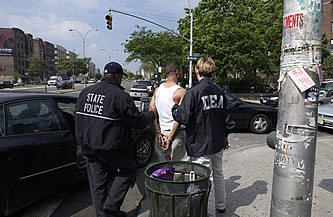
    stop and frisk laws in pennsylvania The US Constitution gives all citizens the right to freedom from unreasonable searches and seizure; in most cases, this requires authorities to have a warrant before entering your home or searching your person or possessions. The exception to this rule is called “Stop and Frisk”, which gives police the right to stop you and frisk, or pat you down and look for illegal items or weapons. When can Stop and Frisk be implemented – and what problems are associated with this practice? Learning more about the procedure can help you understand your rights and what you should do if you are subjected to a Stop and Frisk pat down.

    The History of Stop and Frisk

    In 1968, the Supreme Court ruled that police officers could detain or frisk a person if there is a reasonable suspicion of wrongdoing. If the police believe that the person stopped is hiding a weapon, they can frisk that individual to check for dangerous items. Terry v. Ohio granted authorities the right to search pretty much anyone they feel is behaving in a suspicious manner. Terry v. Ohio introduced the Stop and Frisk concept, which has evolved into the process used today. While this procedure was originally intended to improve police officer and public safety, it has been challenged in recent years, with a variety of groups leveling charges of racial profiling and unfair stops and seizures at police groups in Pennsylvania, New York and other states.

    Stop and Frisk Components

    • Stop: A stop involves either a physical detention of an individual or a display of authority which results in an individual understanding they are not free to leave the area until the police release them.
    • Frisk: An officer will actually lay hands on the stopped individual and pat down their clothing to see if they are hiding or carrying any weapons or drug paraphernalia. A frisk is done over the clothing and is intended to protect the officer from harm by exposing any dangerous weapons right away.

    Used as it was originally intended, Stop and Frisk should only be implemented when officers have a reasonable suspicion that the individual is engaging in criminal activity or hiding a weapon. In recent years, charges of abuse by police in some cities detail the Stop and Frisk practice as one that is used illegally against minorities. Residents in Pittsburgh created a Change.org petition challenging the practice and the entire concept of Stop and Frisk has been challenged in the city.

    Stop and Frisk in Pennsylvania

    Pittsburgh

    A Pittsburgh resident created a Change.org petition to end Stop and Frisk within the city, citing several local and national cases in which police abused their power and overstepped boundaries, resulting in injury or even death for those stopped for a warrantless search. The petition cites some troubling statistics: 60% of those chosen for Stop and Frisk in the city are African American, even though African Americans make up only a quarter of the city’s residents.

    Philadelphia

    In July 2011, the ACLU and the Philadelphia Police Department reached a settlement in the Bailey v. City of Philadelphia case that required the city to begin to document Stop and Frisk statistics. Citing abuse of power by the police department and charging the city with unfair racial profiling practices, a group of 8 minority defendants sued the city. The settlement required the city to furnish reports and statistics regarding the citizens that were stopped and searched each year.

    Data for 2014, the most recent year available, reveals that African Americans are more likely to be detained and searched in Philadelphia than their white counterparts – and that they are more likely to be detained without reasonable cause. Despite the still disproportionately high numbers, the actual number of stops has gone down since the city began actively tracking and reporting the data. Actually having to report a stop and detail both the reason for the action and the outcome may reduce stops simply due to race or other, unjustifiable factors.

    Know your Rights

    Are police in Pennsylvania and other states targeting specific minority or demographic groups for unfounded or unjustified warrantless searches? The ACLU and other groups, including the nonprofit Sunlight Foundation, believe so.

    If you have been unfairly stopped and frisked or you have experienced any adverse interaction with authorities, you need the right team on your side. Contact us for help with your legal challenges and to learn more about protecting your rights when it comes to Stop and Frisk action in Pennsylvania.

    What is a Bench Warrant?

    January 12, 2016/in Criminal Defense /by R. Anthony DeLuca

    What is a Bench Warrant There are many different kinds of warrants that can be issued depending on what you are wanted for. While many of the warrants people think of when they hear the term are related to laws they have broken, allowing the police to bring them in to be charged, a bench warrant is a little different. In Pennsylvania, a bench warrant is issued when individuals who are supposed to appear in court, for any reason, do not attend. It is the court’s way of ensuring the individuals who are supposed to be seen in the court for any reason are brought up on the proper charges. However, the consequences of their actions can often be compounded by this failure to appear in court.

    What Happens When a Bench Warrant Is Issued?

    When a bench warrant is issued against an individual, it alerts the police department of the right to arrest the individual so they can remain vigilant. While the purpose of this type of warrant isn’t to bring in an individual on a crime per se, it ensures they attend the hearing they previously missed so they can be brought up on the charges in that case. The bench warrant is essentially a means to this end, rather than relying on the charged individual to appear on his or her own, since he or she has previously failed to do so already. It takes some of the responsibility off the charged person and places it in the hands of law enforcement. In most cases, the individual must be pulled over for another reason before the warrant can be acted on.

    What Procedures Are Followed?

    Once an individual has been brought in on a bench warrant in Pennsylvania, there is a certain procedure that will take place in the court in order to move forward with the case. Upon arrest, the individual will be delivered to the hearing immediately to go over the charges. In some cases, this hearing may be conducted over two-way audio/visual conferencing, rather than in person, depending on availability, location and other factors. In a situation where the individual is arrested on a bench warrant in the county in which it was issued, but the judicial officer is unavailable for an immediate hearing, the individual will be kept in the county jail until the first available opportunity to hold the hearing. If the individual is arrested in a different county, they will alert the issuing county regarding the capture of the individual and follow their instructions for transportation. Individuals who are held on a bench warrant must have a hearing within 72 hours or on the next business day closest to the 72 hour mark or they must be released. They cannot be held for longer than this time period.

    What Should You Do?

    You don’t have to wait until you are arrested by an officer when you find out a bench warrant has been issued against you. Most individuals are well aware they will be issued a bench warrant because they have failed to appear in court as ordered. However, many people think they won’t be found so they continue to hide. Unfortunately, with all the available resources today, it is nearly impossible to escape a bench warrant, primarily because the arresting officer doesn’t necessarily need another reason to speak with you. If they know who you are, they can make an arrest with this type of warrant. Therefore, your best course of action if you find yourself in this situation is to contact a lawyer and determine your next course of action so you can get the best possible outcome from your case.

    Most people think of warrants for your arrest that relate to a crime that has been committed, but this isn’t the only purpose of these documents. If you have a scheduled court appearance and you fail to appear, you could be facing additional charges, which may include the issuance of a bench warrant that allows law enforcement to bring you in. They will be able to put you under arrest and bring you in immediately without needing another reason, which will put you in front of a judicial officer so your case can be heard. This will ensure you face the judge for the original charges and face the consequences of wasting the courts time previously.

    If you’re facing a bench warrant, you need an attorney who can help. Contact us so we can help you determine the best course of action for your case.

    Page 4 of 6«‹23456›»

    Criminal Defense

    • 1st DUI
    • Criminal Defense
    • Drug Charges
    • Pennsylvania DUI Defense Attorneys
    • Federal Fraud Crimes Attorneys
    • Gun Charges
    • Homicide
    • Involuntary Manslaughter
    • Pittsburgh Juvenile Crime Attorneys
    • Marijuana Related Crimes
    • Mortgage Fraud
    • Theft and Larceny
    • Pittsburgh Tax Evasion Attorneys
    • Vehicular Manslaughter
    • Pittsburgh White Collar Crimes Attorney
    [gs_logo]

    DeLuca, Ricciuti & Konieczka


    Address:

    Pittsburgh Criminal Defense Attorneys

    DeLuca, Ricciuti & Konieczka

    225 Ross Street, 4th Floor

    Pittsburgh, PA 15219

    Phone: 412-281-6869

    Fax: 412-281-1350

    Hours: Mon - Fri: 9AM - 5PM

    Follow Us

    • Facebook
    • Gplus
    • Linkedin

    Recognized by:


    Lead Counsel Rated